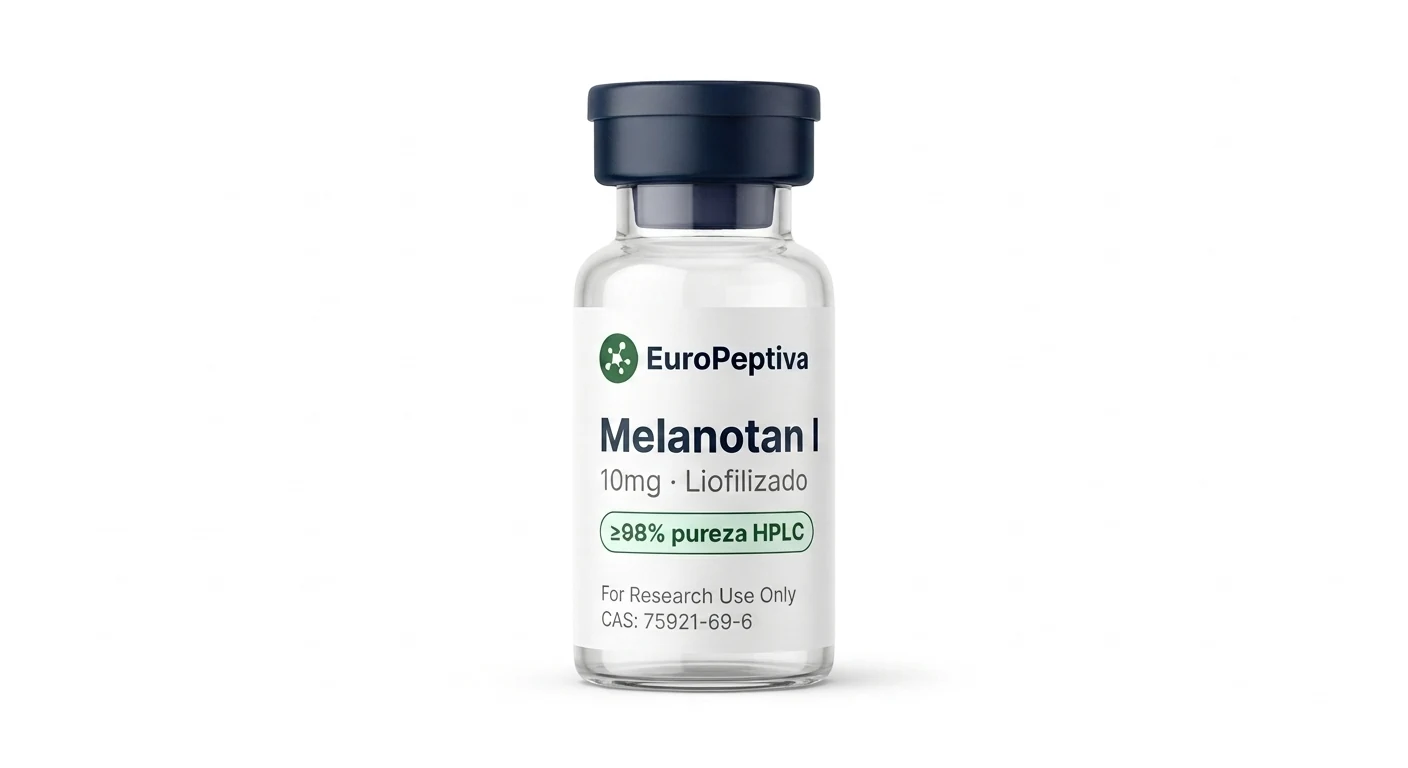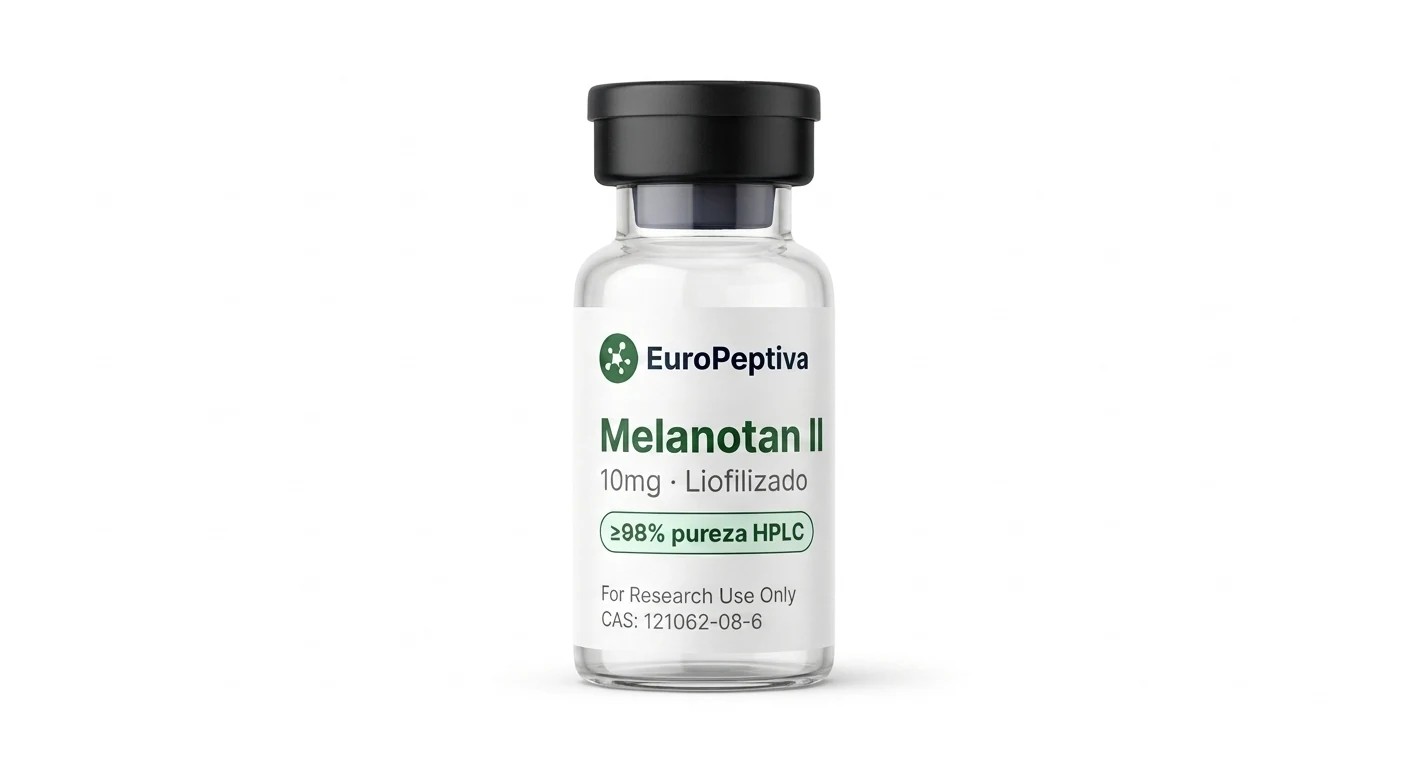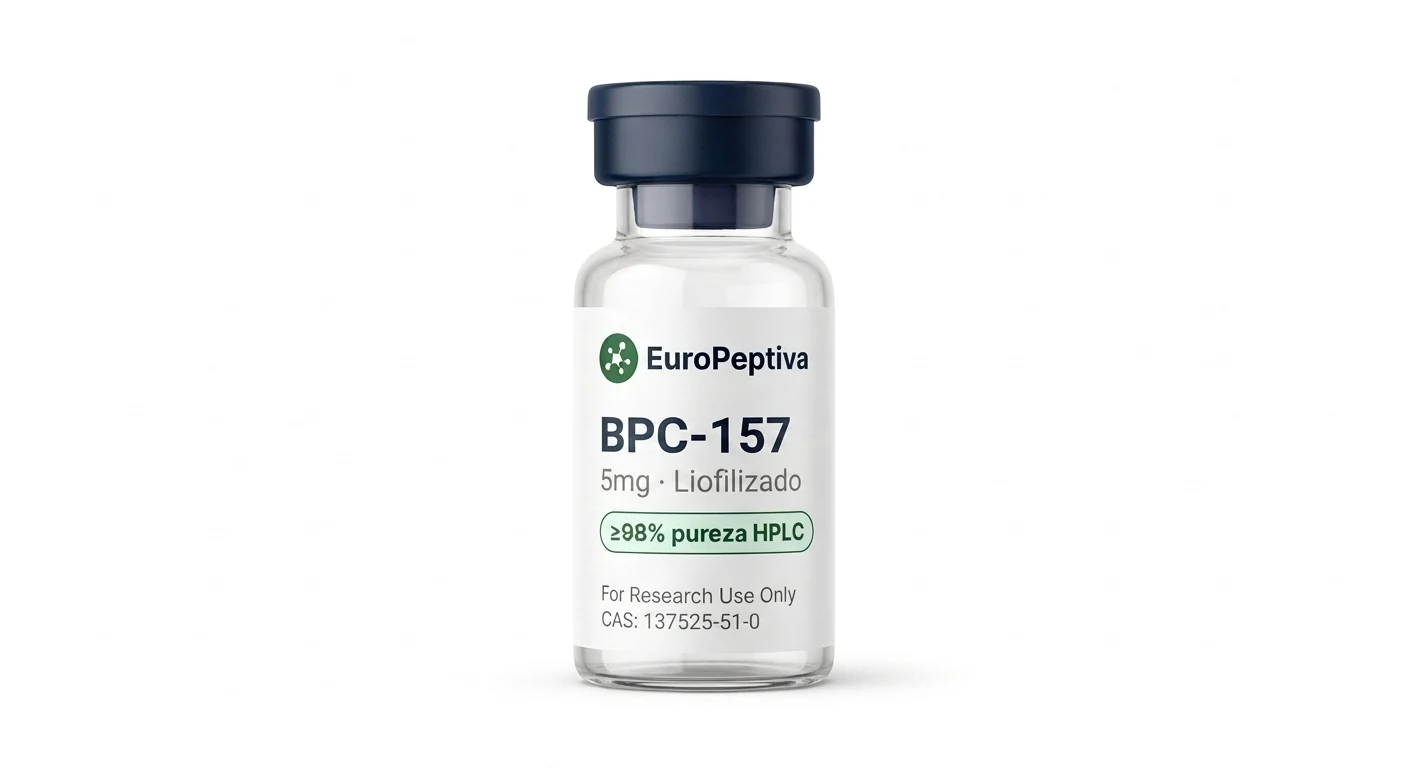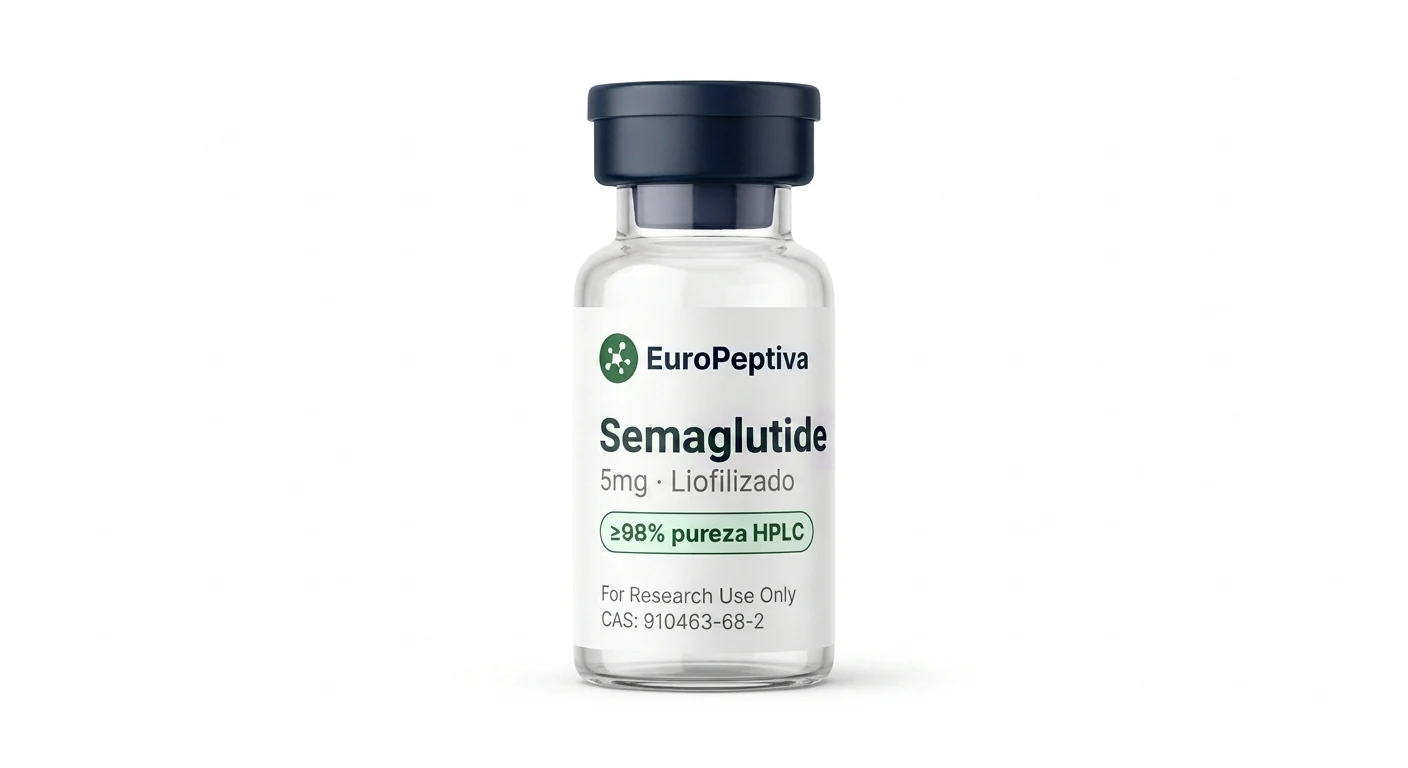
Melanocortins & copper peptides
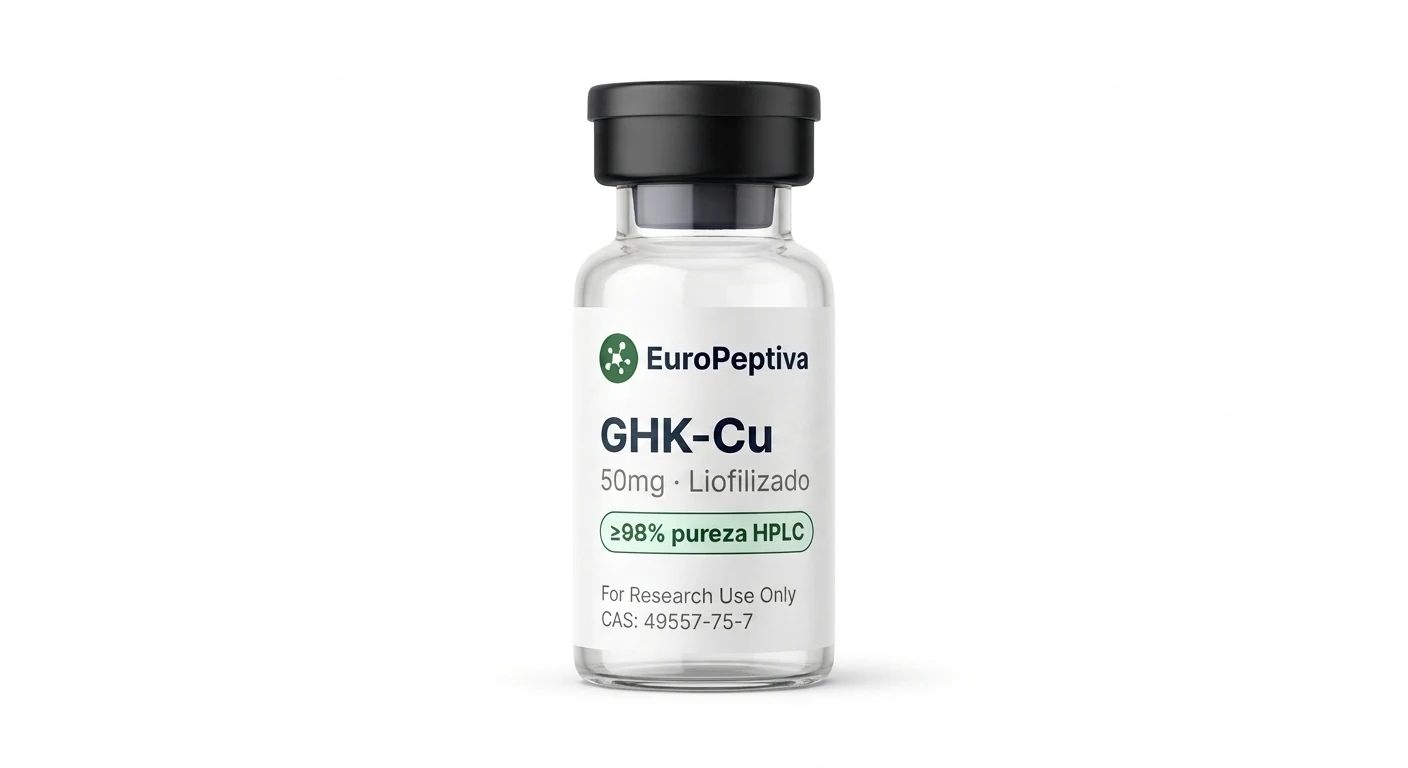
GHK-Cu
Copper peptide researched for its role in skin and hair regeneration.
| Purity | >98% |
| Molecular formula | C14H24CuN6O4 |
| Molecular weight | 403.93 Da |
| CAS number | 49557-75-7 |
For scientific research only. This product is not approved for human, veterinary or diagnostic use. By purchasing it you confirm that you will use it exclusively for laboratory research purposes.
Research background
GHK is a tripeptide — glycine, histidine and lysine — that occurs naturally in human plasma and has a very high affinity for copper(II). The complex it forms with that ion is the form in which it is studied. Its plasma concentration declines with age, and that observation is what opened the line of research.
What has been studied centers on the extracellular matrix: collagen and elastin synthesis, tissue remodeling and modulation of gene expression in fibroblasts, with further work on the hair follicle. Much of the literature is cell culture and animal models; in dermatology there are human studies, but small ones.
Reconstitution and handling
- Work on a clean surface and disinfect the vial stopper with an alcohol wipe before piercing it.
- Add the bacteriostatic water slowly, letting it run down the inner wall of the vial rather than landing on the powder.
- Do not shake. Swirl the vial gently until the lyophilized powder has fully dissolved: vigorous agitation degrades the peptide.
- The solution should come out clear. If it turns cloudy or shows suspended particles, do not use it.
Storage and stability
- Before reconstitution: refrigerated between 2 and 8 °C, protected from light and moisture.
- After reconstitution: in the fridge and away from light. In solution the peptide lasts far less than as a powder, so it is best used soon.
- Avoid freeze-thaw cycles.