Cellular metabolism & antioxidants
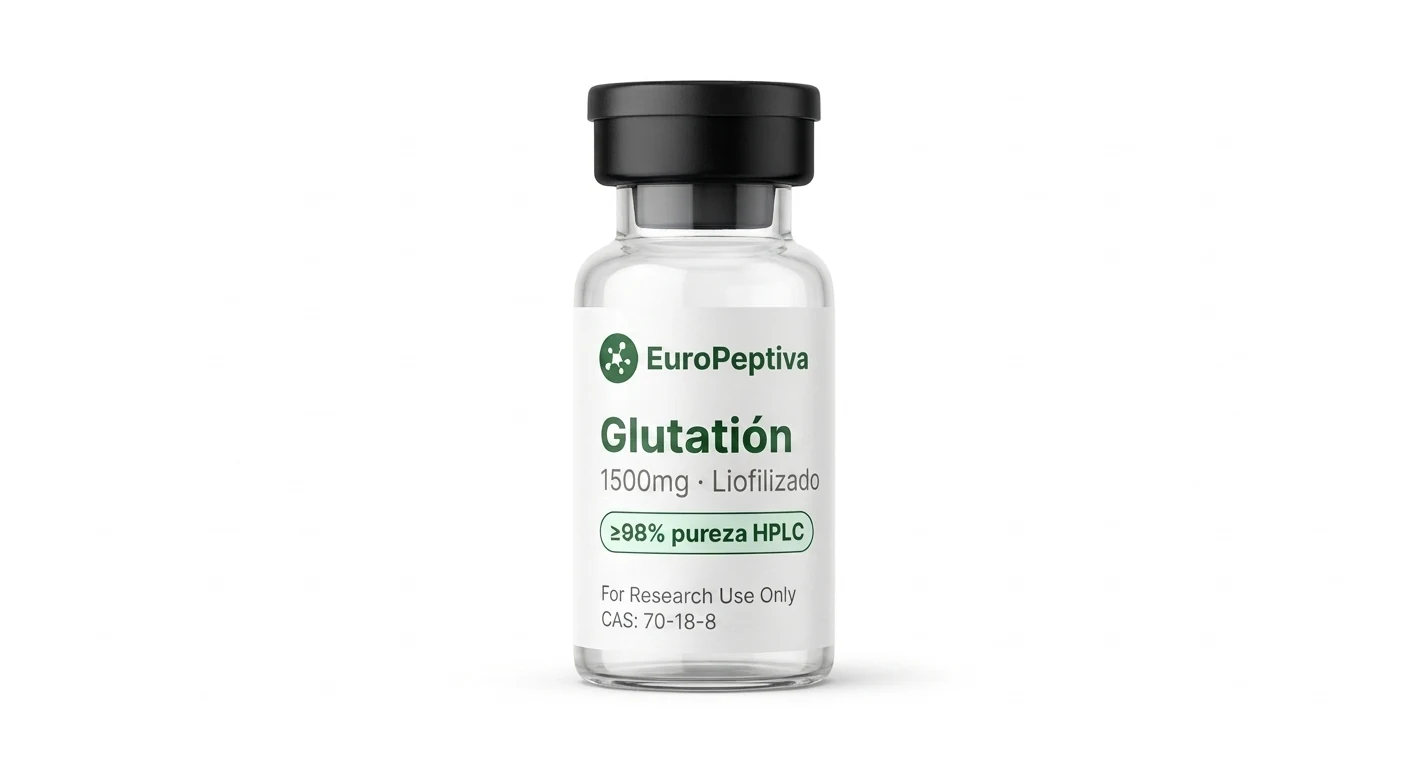
Glutatión
The body's master antioxidant, researched for its role in cellular detoxification.
| Purity | >98% |
| Molecular formula | C10H17N3O6S |
| Molecular weight | 307.32 Da |
| CAS number | 70-18-8 |
Research background
Glutathione is a tripeptide of glutamate, cysteine and glycine with a structural quirk: the glutamate bond is gamma rather than alpha, which makes it resistant to ordinary peptidases. It is the most abundant non-protein antioxidant in the cell.
What is studied about it is redox balance: the ratio between its reduced form (GSH) and its oxidized form (GSSG) is used as an indicator of a cell's oxidative stress. It also takes part in phase II conjugation through the glutathione S-transferases and is the cofactor of the glutathione peroxidases. A recurring point in the literature is its poor oral bioavailability, which is what has pushed research towards other routes and towards its precursors.
Reconstitution and handling
- Work on a clean surface and disinfect the vial stopper with an alcohol wipe before piercing it.
- Add the bacteriostatic water slowly, letting it run down the inner wall of the vial rather than landing on the powder.
- Do not shake. Swirl the vial gently until the lyophilized powder has fully dissolved: vigorous agitation degrades the peptide.
- The solution should come out clear. If it turns cloudy or shows suspended particles, do not use it.
Storage and stability
- Before reconstitution: refrigerated between 2 and 8 °C, protected from light and moisture.
- After reconstitution: in the fridge and away from light. In solution the peptide lasts far less than as a powder, so it is best used soon.
- Avoid freeze-thaw cycles.